Case study · FAANG · NDA · 2026

GUTSY

Turning months of guesswork into real-time, wearable gut-health data.

A moonshot concept for chronic-illness care, sensing what the gut is doing as it happens, instead of waiting months for a lab to tell you.
Year2026RoleProduct Designer + UX ResearcherTeamAshna · Sofia · NDA labBuilt withFigma · Stitch · Gemini · Claude
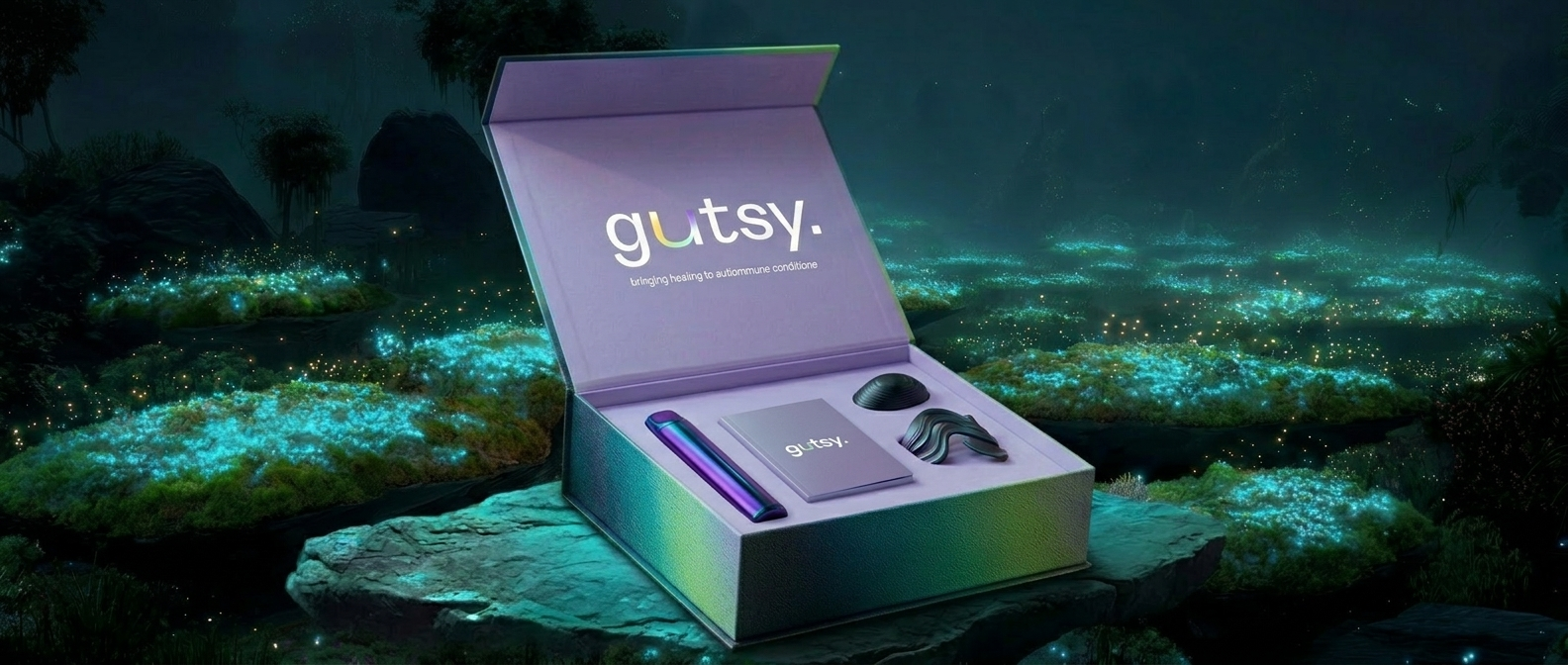
HERO PRODUCT / BRAND SHOT · Sofia's photography
Photography · Sofia Nuñez Morales

The context

A 6-week moonshot for chronic-illness care, set by a world-renowned innovation lab.

An open brief: as AI automates the output of work, what becomes of human work? We made it concrete for autoimmune & chronic-illness patients, two designers, one NDA client, six weeks.

The problem

The gut changes daily. The lab takes months.

Patients manage a body no one fully sees, a 3–4 month lab lag against a microbiome that shifts daily, with no affordable, real-time read of the gut.

I track everything and still get blindsided between appointments.
Interviewee, anonymized · 1 of 5

The process

Foresight → research → a sharper pivot.
01 · FORESIGHT
Map the futures
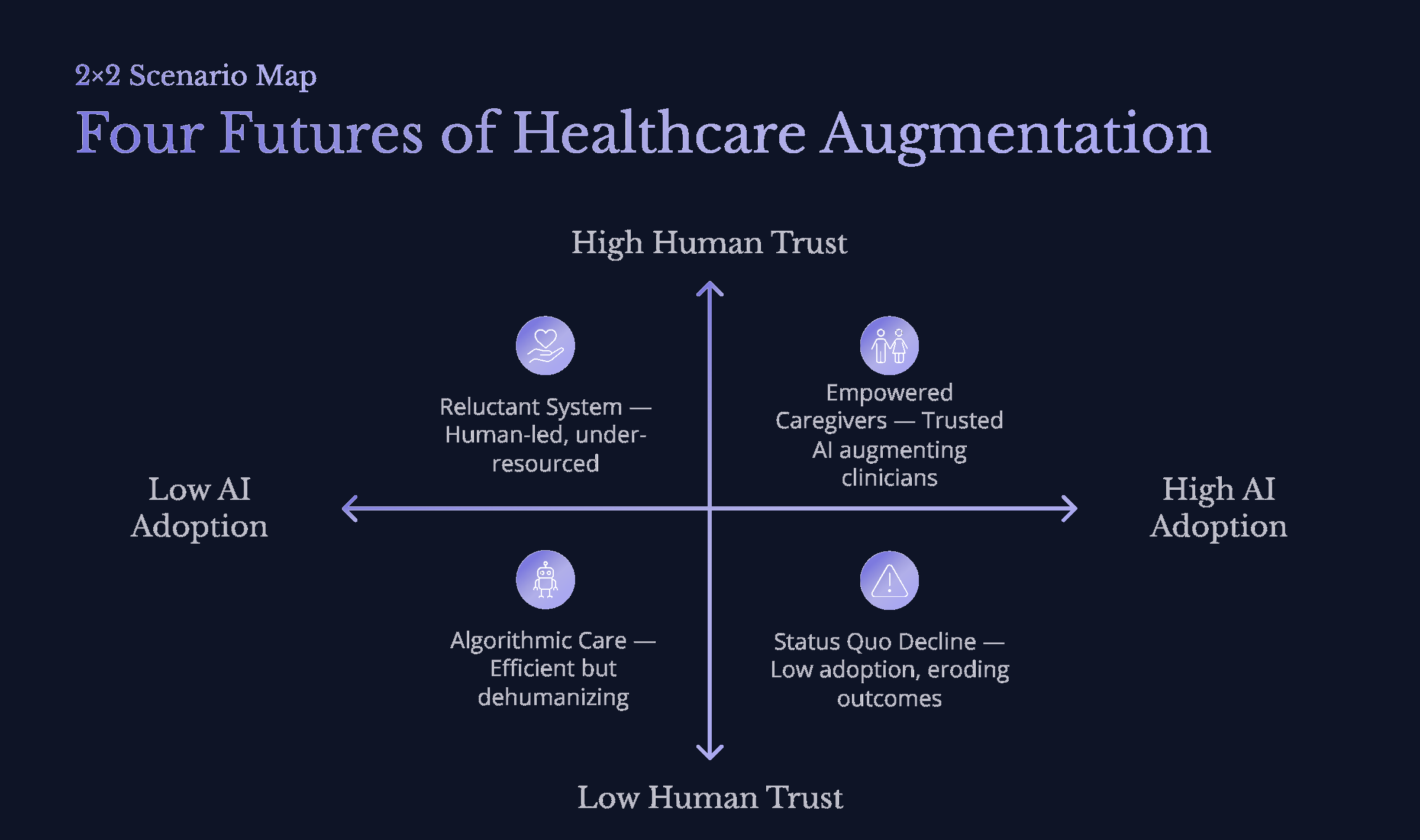
Signals & drivers → a 2×2 scenario map → riskiest-assumption testing.
02 · RESEARCH
Talk to people
5 interviews + cold-LinkedIn recruiting → thematic synthesis.
03 · PIVOT
Find the real user
We rejected the clinician. The patient is underserved → an evidence-led B2B→B2C pivot.
2×2_scenarios · foresight
2×2 FUTURE-SCENARIO MAP
dashboard wireframes · lo-fi → 3 options
as-built
A
WIREFRAME · as-built
split status column
B
WIREFRAME · split status column
triage first
C
WIREFRAME · triage first
Three lo-fi layouts for the practitioner dashboard, weighed against each other before a single hi-fi screen.

The solution

GUTSY: sense, test, steward.

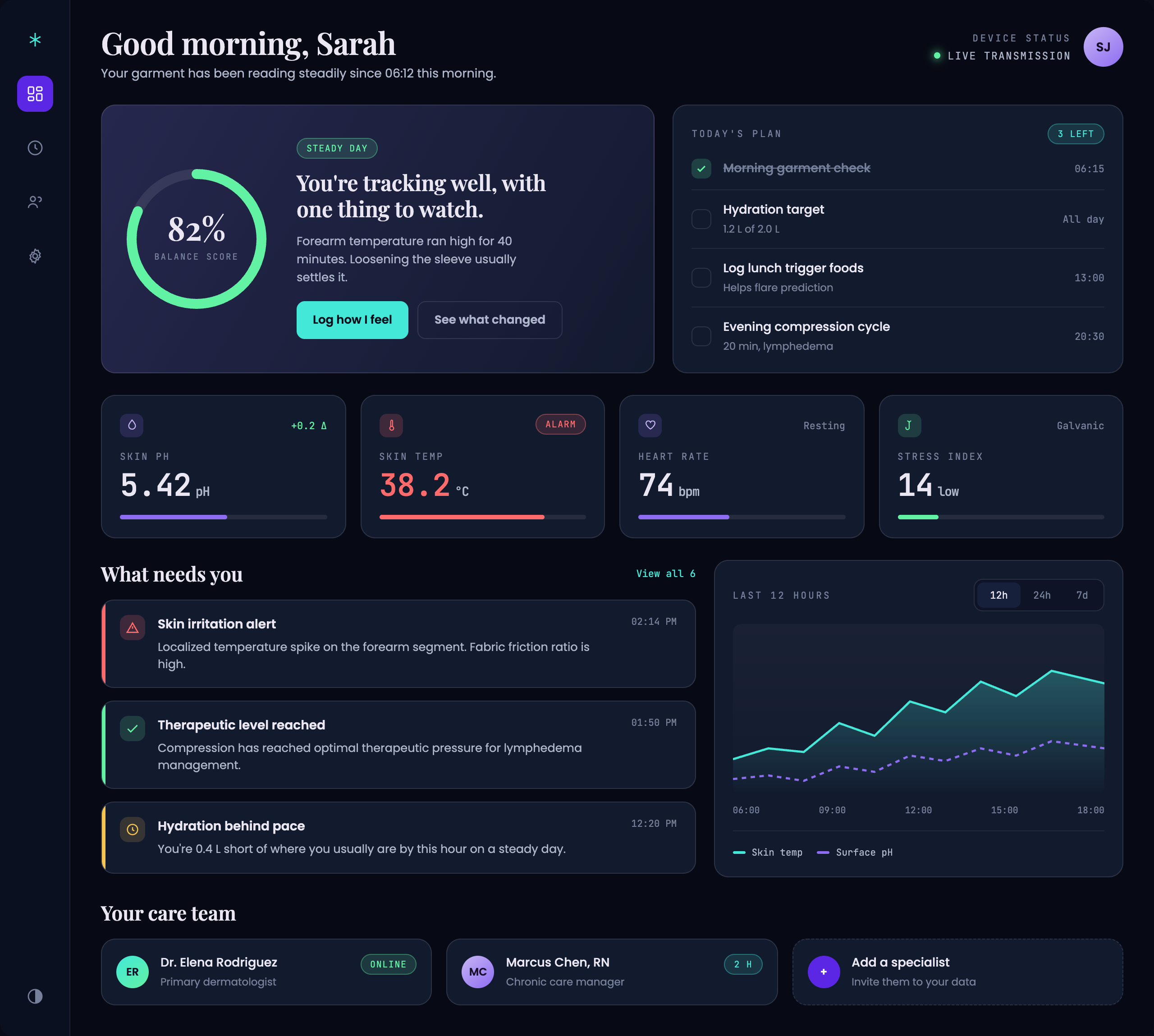
One system in three moves. AI synthesizes the data; humans steward the body. A 5-screen practitioner dashboard, paired with a patient companion app.
01 · SENSE
Sense
Discreet wearables read the gut continuously.
02 · TEST
Test
At-home kits add the depth a wearable can't, on the patient's schedule.
03 · STEWARD
Steward
A patient app + practitioner dashboard unify one patient across specialists.
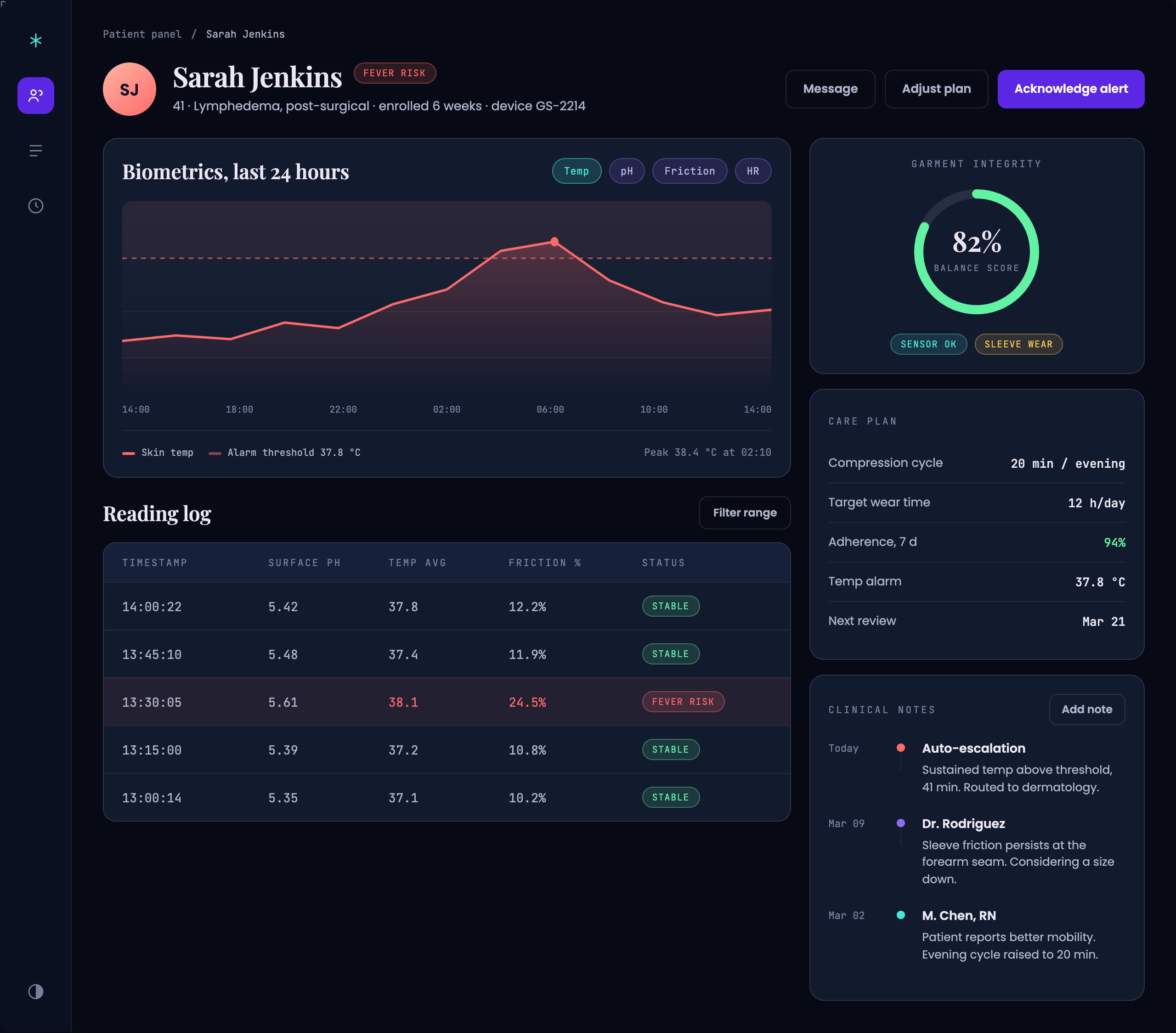
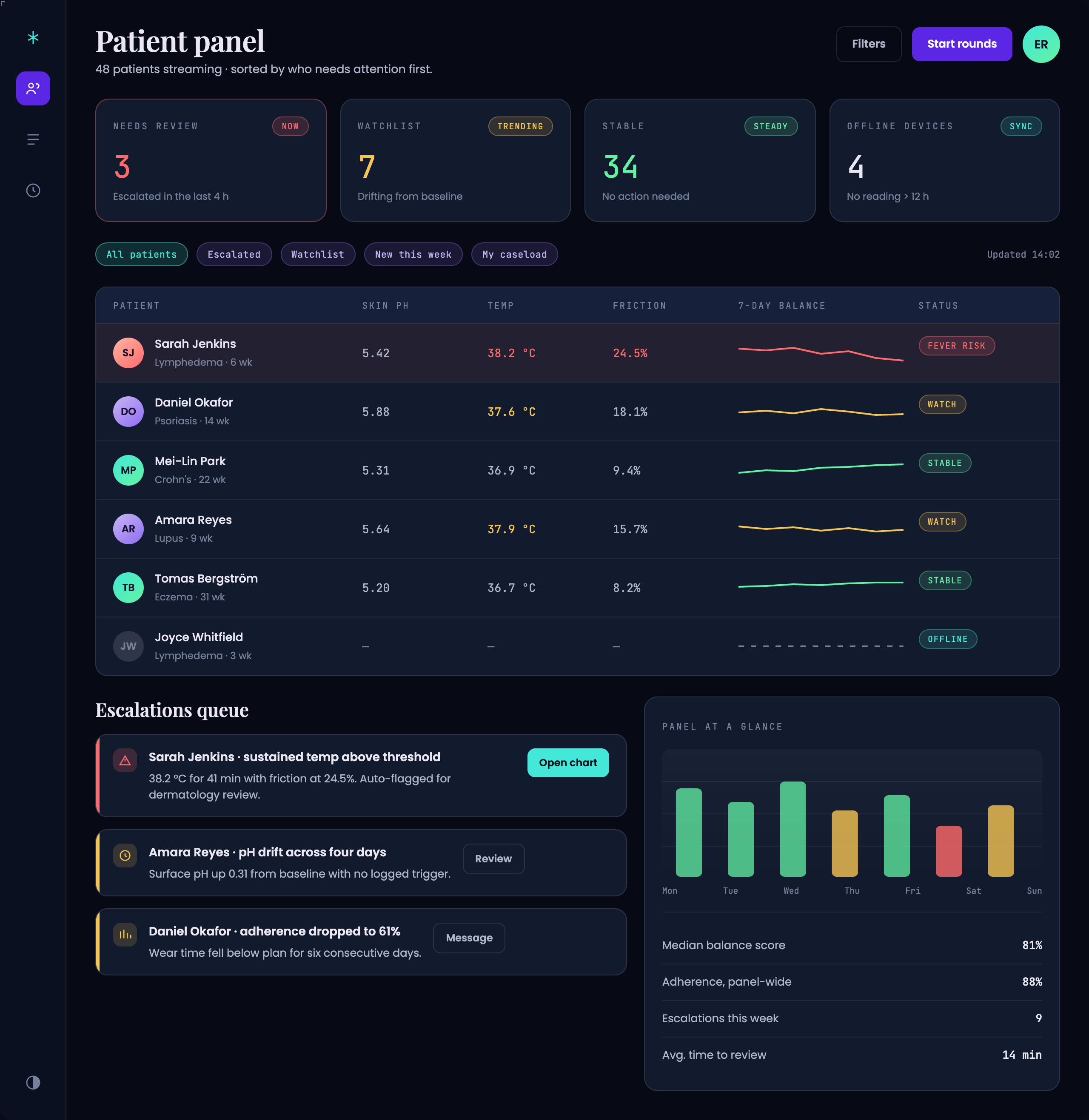
gutsy.health / clinician · patient panel
PRACTITIONER DASHBOARD · drop a desktop screenshot
gutsy.health / today
Patient · today
Patient dashboard · today's read
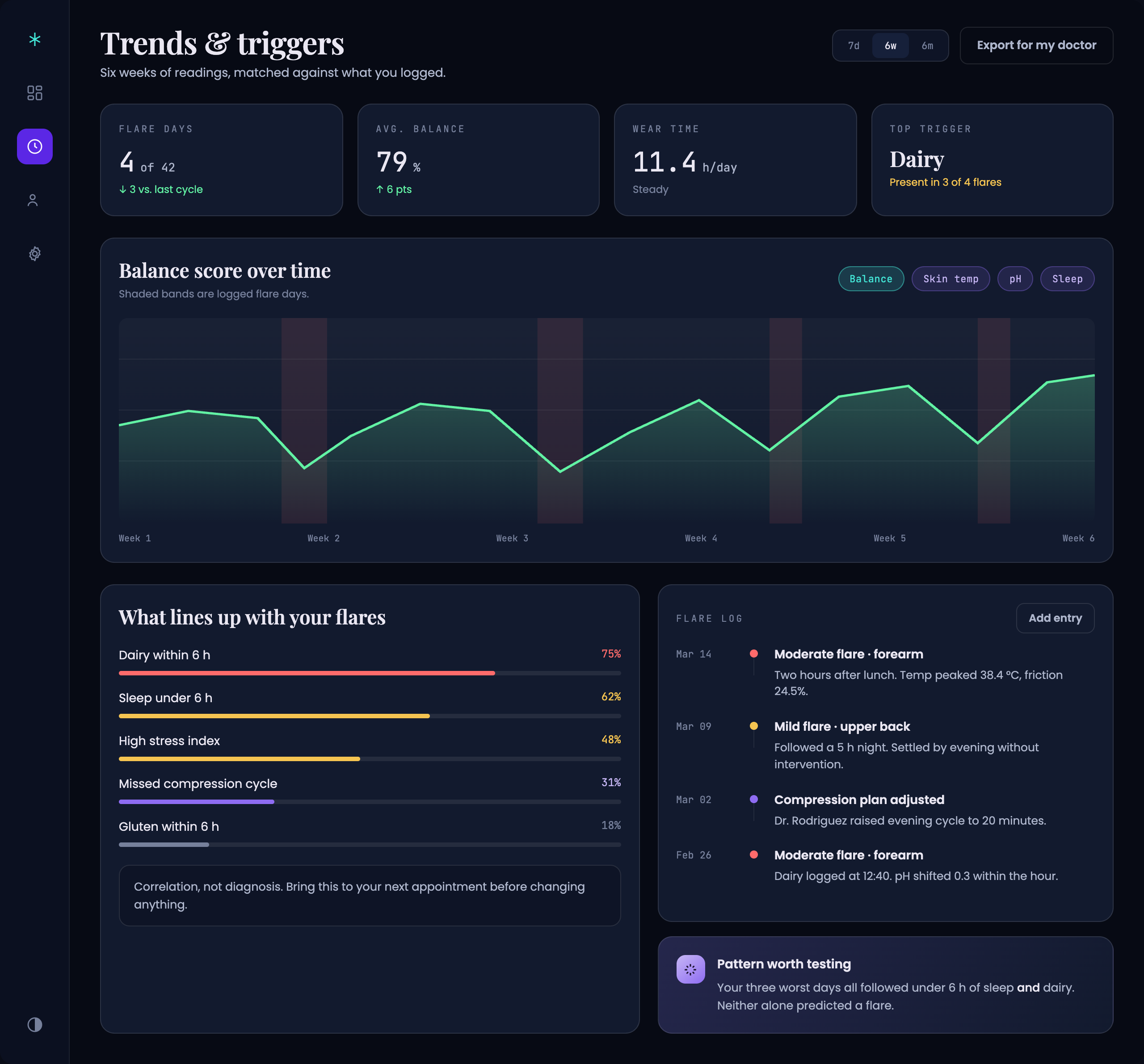
gutsy.health / trends
Patient · trends & triggers
Patient dashboard · trends & triggers
gutsy.health / chart
Clinician · patient chart
Clinician dashboard · patient chart
I coined “Gutsy” and designed the end-to-end digital product. Physical product, including sensor housings and hydrogen rig, designed, prototyped & photographed by Sofia Nuñez Morales.

Design system

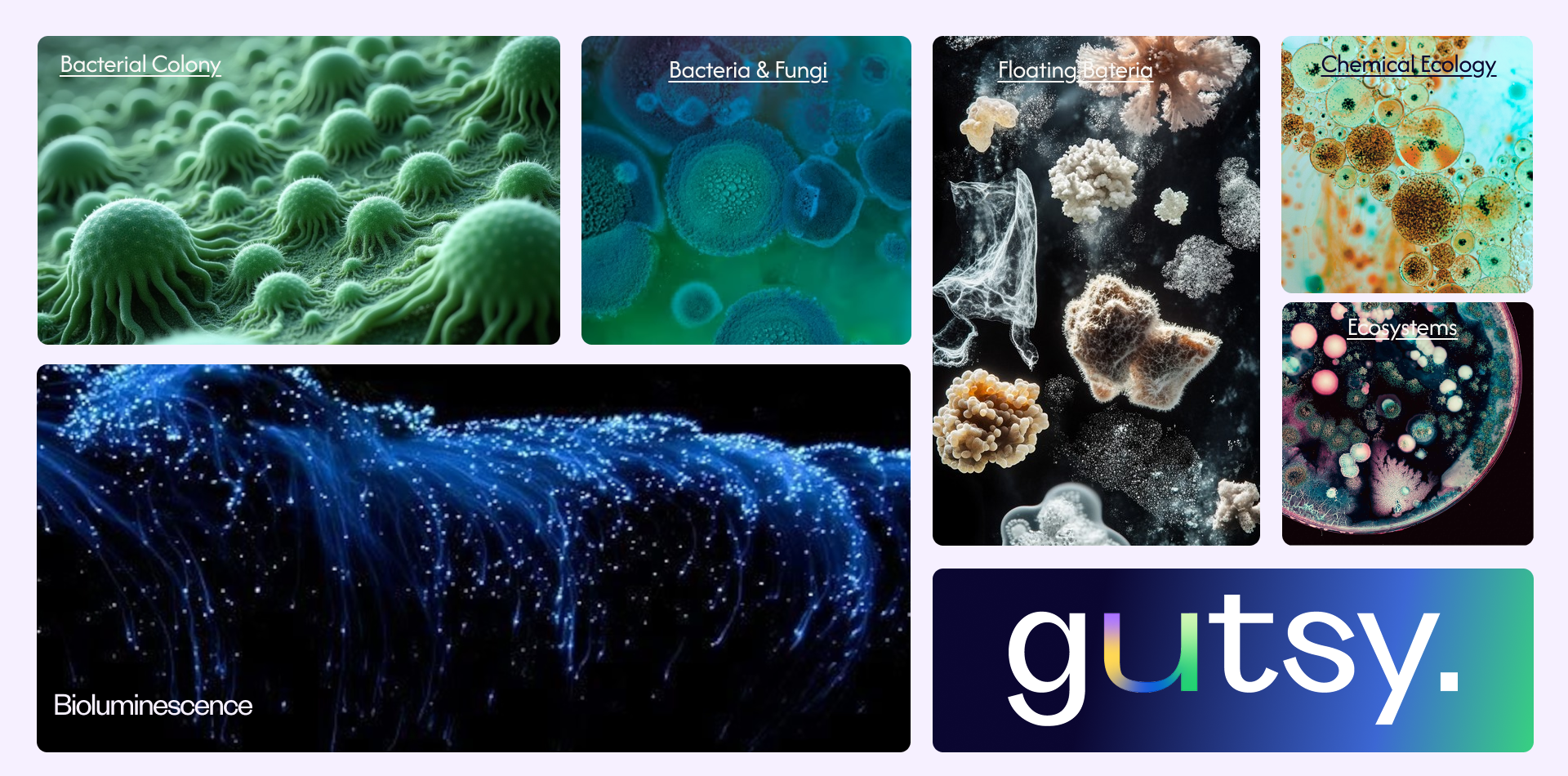
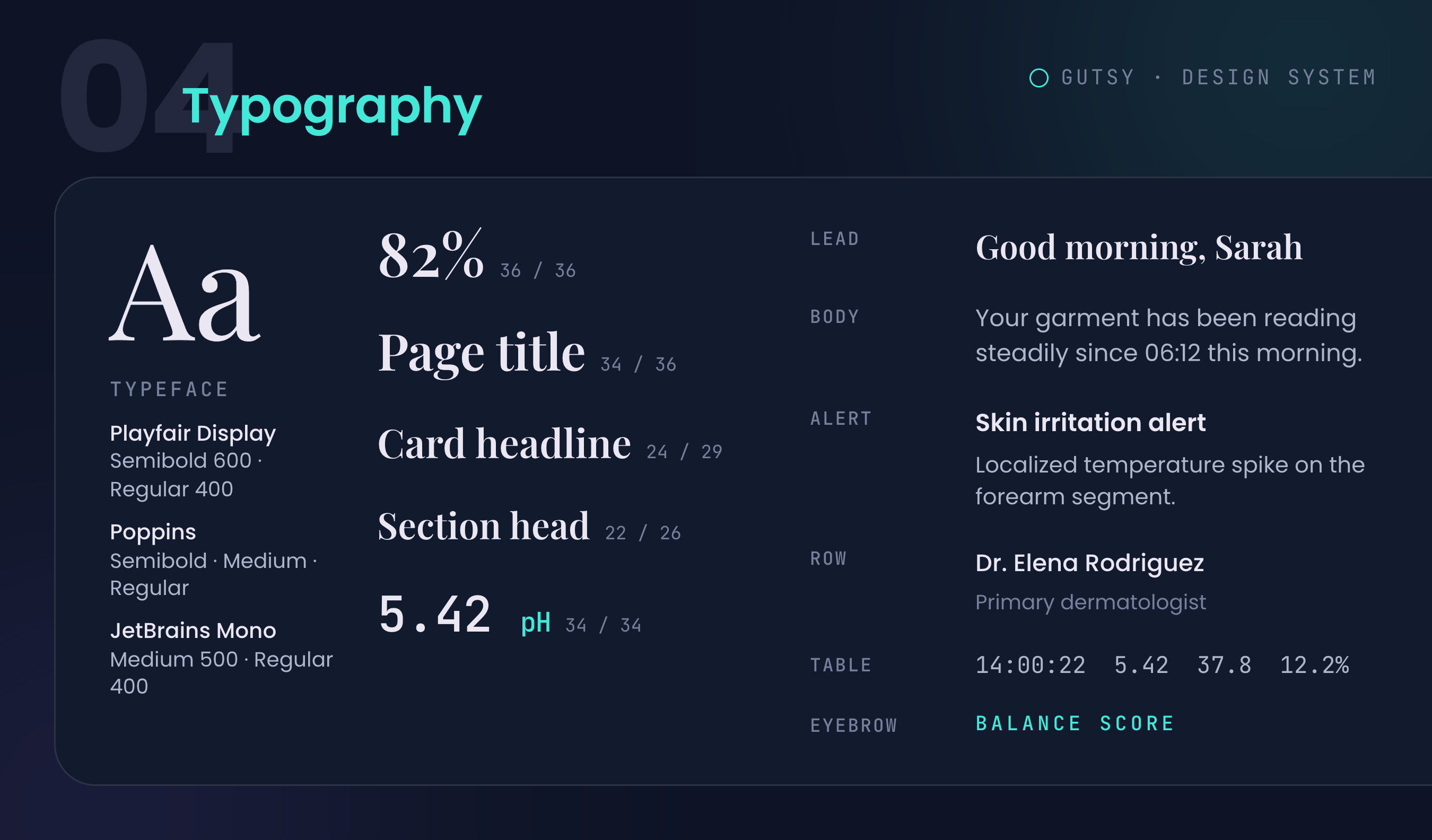
A small system carries the bioluminescent brand: GUTSY's deep-navy base, lavender-and-violet with bio-cyan & bio-green accents, and a Playfair / Poppins / JetBrains Mono type scale.

SECTION 01

1.0
Brand

The GUTSY mark and the bioluminescent world it came from: bacterial colonies, floating cultures, chemical ecology. A living, glowing read on a body no one usually sees.
Logo · drop from Figma
Design system01
SECTION 02

2.0
Moodboard

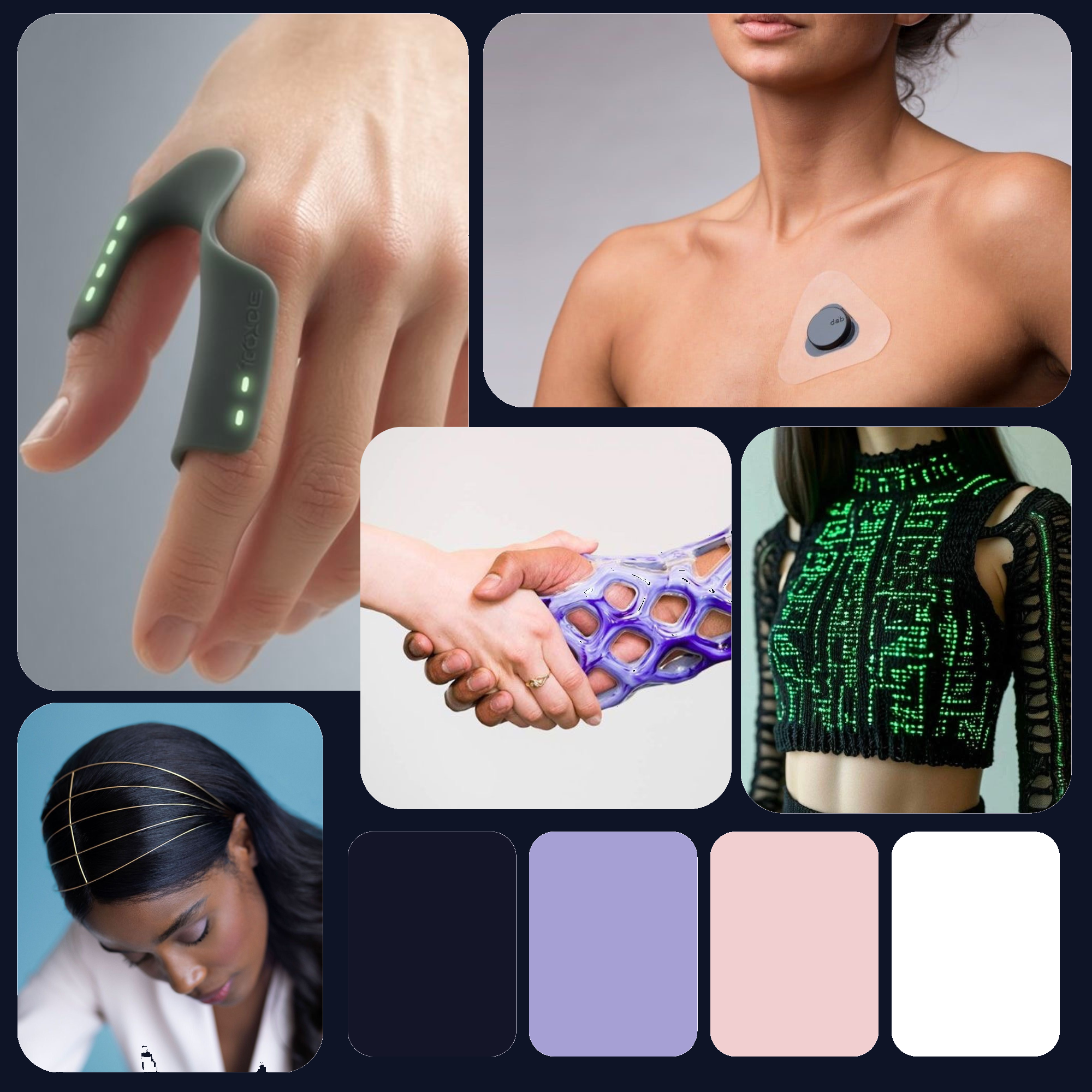
The reference world the interface came from: ambient wearables worn without ceremony, soft materials against skin, and the indigo-and-lavender palette the product inherited.
Moodboard · ambient care
Design system02
SECTION 03

3.0
Colour

A deep-navy base lets bioluminescent accents glow: lavender and violet for depth, bio-cyan and bio-green for live signal, warm linen for editorial calm.

Void
#070A14
Panel
#121A2E
Lavender
#C6B6F4
Violet
#8E6CF2
Bio-cyan
#43E8D8
Bio-green
#62F2A4
Linen
#ECE3D2
Ink
#14101C
Design system03
SECTION 04

4.0
Type

Three speakers, one scale. Playfair for the product’s own voice, Poppins for the interface explaining itself, and JetBrains Mono for everything the sensors measure.
Typography · drop from Figma
Design system04

The outcome

An open prompt → a fundable direction in six weeks.

4Lab leaders endorsed advancing to clinical validation
Top 9Impact Awards finalist, pitched to a panel of 3 judges
9/10Usability rating across 5 iterations